
Those Who Enable Flow
The mind needs permission to breathe

Hello, Dear Readers,
Welcome back. Today, I am going to write about the importance of flow for our minds to breathe.
Today’s trio of thoughts:
THOUGHT 1: A QUOTE
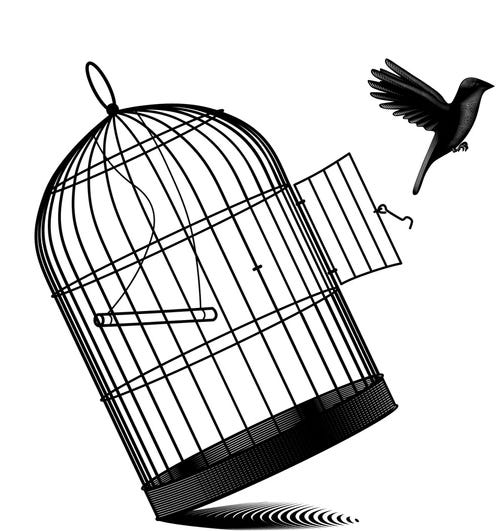
“The caged bird sings with a fearful trill, of things unknown but longed for still, and his tune is heard on the distant hill, for the caged bird sings of freedom.”
In “I know Why The Caged Bird Sings” a book written by Maya Angelou, 1969.
Maya Angelou (1928–2014) was an American poet, memoirist, singer, dancer, actress, and civil rights activist.
She’s best known for her series of seven autobiographies, the first of which, I Know Why the Caged Bird Sings (1969), brought her international recognition. That book tells the story of her early life, exploring themes of racism, identity, resilience, and the power of words.
Beyond her literary work, she was active in the civil rights movement, working with both Dr. Martin Luther King Jr. and Malcolm X. Over her lifetime, she became a cultural icon for her wisdom, artistry, and ability to capture the human experience—especially themes of struggle, hope, and liberation.
Maya’s work was in relation to the civil rights movement in America, but so much of her work can be understood also in relation to the mind.
Her famous metaphor of the “caged bird” is most directly about racial oppression and the longing for freedom. The “cage” can be understood more broadly as the many ways humans are restricted: physically, mentally, socially, psychologically, and spiritually.
Our journey is in finding ourselves first. If you want to, that is.
THOUGHT 2: Those Who Enable Flow
It never ceases to amaze me how much intellectual potential we carry, and how society is so effective at narrowing it. Sometimes, these boundaries may be necessary, so we focus on the job at hand or finish a specific task, or meet a defined goal. But beyond those specific instances, as humans who have access to the modern world, we have access to an abundance of knowledge that can help us know more. Do more. Be more.
We are both disablers and enablers. We are restricted and we restrict. As we become aware, we can try and reduce our instinctive and selfish human tendency to restrict the thinking potential of others. We can do this by enabling the flow of others.
We can also be better thinkers and have so much capacity, but we need to put ourselves in positions to be able to enable ourselves the opportunity to become better thinkers. And if you are in charge of others, whether they be little or big, it is your job to inspire the best in them.
There are ways to do this.
To think, we need to be allowed to do it. And we have many external social factors in society as well as in our internal biological wiring, that hold us back and keep us the same.
We are all being held back by our pasts, our social settings, and our mental wiring.
IN CHILDHOOD OUR MINDS STILL REST
Our thinking habits are deeply entrenched. It doesn’t mean they are all wrong; they just ARE for a reason.
I am going to share my story, which, like yours, started when I was a child.
Looking back, I can see how much my environment—and the people in it—limited my thinking opportunities.
Now, as a mother of three, I’m acutely aware of how easily I could either support or restrict my children’s own thinking potential if I react unconsciously, without pausing to consider (second-order critical thinking) what might be right or wrong in that instance. I am always trying to catch myself between giving them the structure to feel safe, but encouraging the freedom to keep going.
As an adult, I have spent many years trying to allow myself to find the core me, because I know that is where my strengths lie, and that is where yours do too. Slowly, as I have found myself, I can be unapologetically me. It is liberating to know that I have so many strengths that I didn’t know existed because I was too busy trying to be the person the world wanted me to be.
There was no question that I was raised in a very loving household. And that was most important. There was love—and there was a lot of it. My parents cared about my brother and me deeply, and we felt that.
But they were also part of a very strong cultural unit. And the tradition of that deep cultural embedding was to do most of the thinking for their children. The community we were part of—Indian—was also very much a familial umbrella, where the family as a unit, but also as an extension of the community, did the thinking for you.
There was little encouragement to explore the individual mind. It was often the collective mind that mattered, and of course, that makes some valuable sense if you are part of a unit that needs to work together and for one another.
NEW IDEAS
But to be better than you are, we must explore new ideas.
And new ideas happen as we encounter something new with the old. That is, as we interact with the felt and known self, with the novel things happening in the world. This is where the magic happens.
Growing up, if I had a question, the answer would simply be told to me. I am naturally an extremely outwardly observant and curious person, and so as a child, if I showed any beginnings of curiosity, the gap in thought was quickly filled with whatever the fastest adult in the room thought was the best answer. The answer was usually culturally appropriate and turned towards the way they thought I should be turned.
Culturally, as a general experience, there wasn’t much encouragement to explore the mind. The ideas they decided were best were passed down and around, keeping everyone in a tight little community of thoughts and beliefs…and values.
Now, this serves many psychological and social benefits because we need to feel like we belong, connect with people and places, and that we are included somewhere by some people. We need to see ourselves in others and recognise a familiar face and words of comfort. I suspect this is why the feeling of home feels so damn good. So parents and communities have many ways of doing things to make sure the people they love and care for stay close and don’t get the type of bright ideas that move them away from the tribe…from home. There are, of course, negatives to this because it doesn’t create the conditions for ideas to come in and be explored. When ideas are explored, we expand, trigger synapses, and we can benefit hugely from this mental expansion.
What’s interesting is that cognitively and intellectually, we have the actual neurological capacity to do it. Many of us barely do it, though.
It is the social setting that often limits us. What we need to ask is, does this way of thinking still serve us?
Being a migrant meant I was also part of a larger society that did not share these micro-community rules (they had their own), and I became too curious about the games other people were playing.
Curiosity always got the better of me, and now, when I look back, it served me very well (despite finding myself in many tricky situations). I followed the unknown paths many times and worked it out. But because I had never been taught how to explore my mind and its ideas, I didn’t really do it for many years. No one gave me the tools to explore my mind’s full capacity. No one said I could, no one asked me questions in a way that showed me that there is so much more where that came from.
At university, I was given the tools to open up my mind. For the first time in my life, I was given the chance to take an idea, read about it, intersect it with other ideas, and take the chance to practice and create innovative thought. This was the most mentally enriching experience I have ever had. It was like someone took the cap off the bottle. Everything poured out.
I could think about anything.
FLOW ENABLERS
I often watch closely to see who enables thought to flow and who limits it. We are all part of groups and systems that either expand or restrict our potential. We know the people who, in conversation, make us feel free to speak openly and fully. And we know the others—the ones with whom we fall into petty conflicts, where every word feels like it must be measured, where we worry more about saying the right thing—or avoiding the wrong thing—than actually thinking together. Our fullest selves emerge when we are in environments that allow us to express, explore, and stretch our thinking further and further.
Of course, we all need some rules of thought—otherwise we’d never reach agreement or solutions. But there must be balance, and, as with everything, there is nuance. Intelligence lies in recognising that nuance. It is never black or white. We need the freedom to think openly and with flow, but also the discipline to direct ourselves, to face the right direction, rather than being pulled off course by every passing thought or idea.
BUT HOW WILL YOU KNOW WHAT IS AIDING AND WHAT IS HINDERING?
Well, you are the best guide. But be careful of those pesky instincts that might push you to be offended instead of being open and reflective. You need to judge what is happening for you in the environment and how you can operate within in.
Pay attention to the feeling it triggers. Do you feel able to share openly and move with the natural flow of the conversation—building, creating, and syncing with others? Or do you feel the need to hold back, hesitate, and measure every word in case it’s taken as wrong?
The environment itself can be the guide. Notice what it allows you to do. Notice which people bring the best out in you and observe what they do to enable that. Observe what shuts you down.
If there’s one thing to take away, it’s this: put yourself in spaces—and with people—that give your mind room to breathe. That’s where flow begins.
Note: This is one idea for today. Another important part of triggering good thinking is being asked challenging questions. Like anything, it requires nuance. We need flow, and we need questions that trigger reflection. When a conversation feels restrictive, that’s when emotion takes over and pulls your focus inward; it stops being a space for innovation, creativity, and intellectual progress. Instead, it becomes a place that redirects your attention to your own internal triggers. And that’s a matter for another day.
THOUGHT 3: ACTIVITIES
Reflect on the following:
Are you someone who enables the people around you to stretch their thinking?
You can know if you are that person by thinking about how often you move with the flow and how often you become distracted and might interrupt the flow.
Do you often put rules around what should be and what should not? Do others agree with your rules? Why are these the rules to begin with?
Are you in environments where thinking outside the box is encouraged?
Do you feel you want to do more, but you are being limited?
Are the people around you bringing the best out in you, or are you feeling boxed or caged?
Readings and references
Caged Bird, a Poem by Maya Angelou
https://www.poetryoutloud.org/poem/caged-bird/
Creativity: Flow and the Psychology of Discovery and Invention by Mihály Csikszentmihályi
This is a great book in PDF form about creativity and flow, and I’d encourage you to read it.
The book shows how creative lives balance paradoxes like discipline and play, solitude and collaboration, and explains how social and institutional settings can either nurture or suppress innovation.
It gives a strong foundation for understanding how humans spark creativity within themselves. We all have it—the ability to think innovatively. And it’s not limited to physical inventions. It’s just as much about the inventions of the mind: inventive thoughts, fresh perspectives, new ideas. The phenomenon is the same. What we need is flow and interconnections between the self (biology/personality/character), the social setting (context/environment), and what we know (knowledge/intellect).
MORE PRODUCTS AND SERVICES
For More Products and Services Click Here: https://stan.store/dreshalovric
Please note that I undertake all of this public work voluntarily and at my own expense. I do this while trying to work to make a living as well as look after my young family, so I cannot offer all of my work for free. Some of my services are paid. However, I promise you I will never place my regular Sunday Synapse Newsletter under subscription or behind a paywall. It will always be free. I share all that I know there. I am also around in the comments to have chats when I can. Thank you for being here with me. I am so grateful to you all.
So well explained! Seeking flow in the real world is to understand it is never perfect but to seek it anyway.